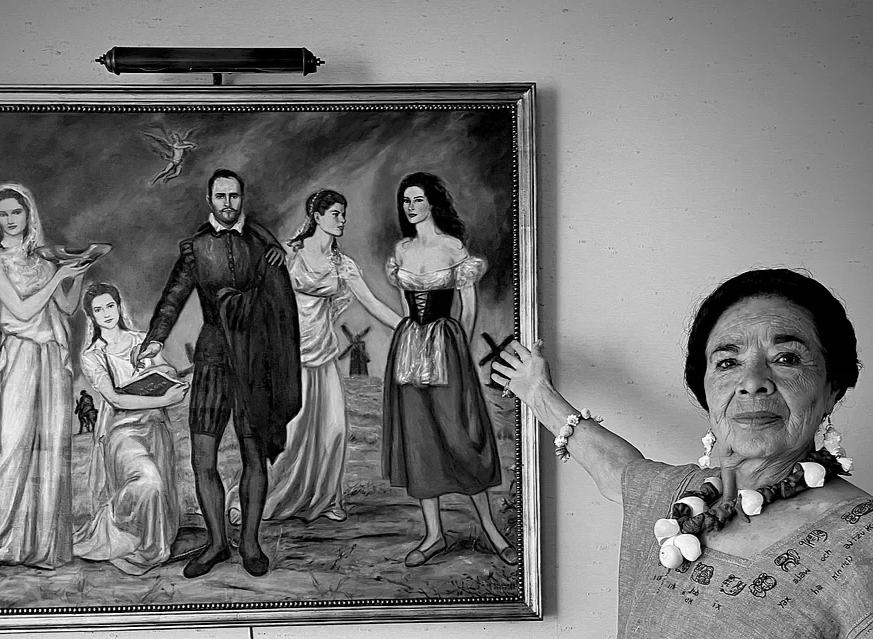
Lola
E: What was Mexico City like when you were growing up?
Lola: It was beautiful, you know. We lived in a very simple house. My parents were simple people, and I was born very free. They didn’t realize they were going to have such a free-spirited girl. Besides, I think I was conceived thanks to a drink called pulque—very Mexican, the kind indigenous people used to drink. Pulque is a white, milky drink made from the maguey plant(she laughs). I went to a beautiful public school that was, and still is, called Basilio Vadillo. I had a friend there—we’ve been friends for 70 or 73 years now—and she was just as crazy as I was. The two of us would jump up and down, and run around. On the swings, we had to tie our skirts with our sweaters so our underwear wouldn’t show. They called me “The Baseball Phenomenon” because I played baseball and would hit the balls right out of the school grounds. My daughters don’t believe me, but I have my school friends who have told them the stories.
E: Was Mexican folklore more deeply rooted in the culture back then?
Lola: Well, believe it or not, no. My mother spoke Otomí and my grandmother was also Otomí. My grandfather had a “touch of white” (piquete de blanco)—she laughs—and lightish eyes. My grandmother, though, was very dark-skinned, with Indigenous cheekbones, and they used the rebozo (shawl) a lot. There was a skirt called enredo, but they called it a chincohete. My mother felt she wasn’t indigenous because she was very fair-skinned, but she had that indigenous “touch.” What’s more, I used to be embarrassed that my mother wore a rebozo and braids. I never saw her in traditional outfits. I used to tell her: “Take off that rebozo, it’s for village people, and take off those braids.” And look at me now; I truly love braids, the rebozo, I love it all. But that only happened when….
THIS IS A SAMPLE FROM THE INTERVIEW WITH LOLA
KEEP READING @SUBSTACK
OR SUSCRIBE TO THE CHANEL HERE: https://carusowrites.substack.com
FORM EVERY DONATION YOU WILL RECEIVE THE PDF VERSION