The Fall of “El Mencho”
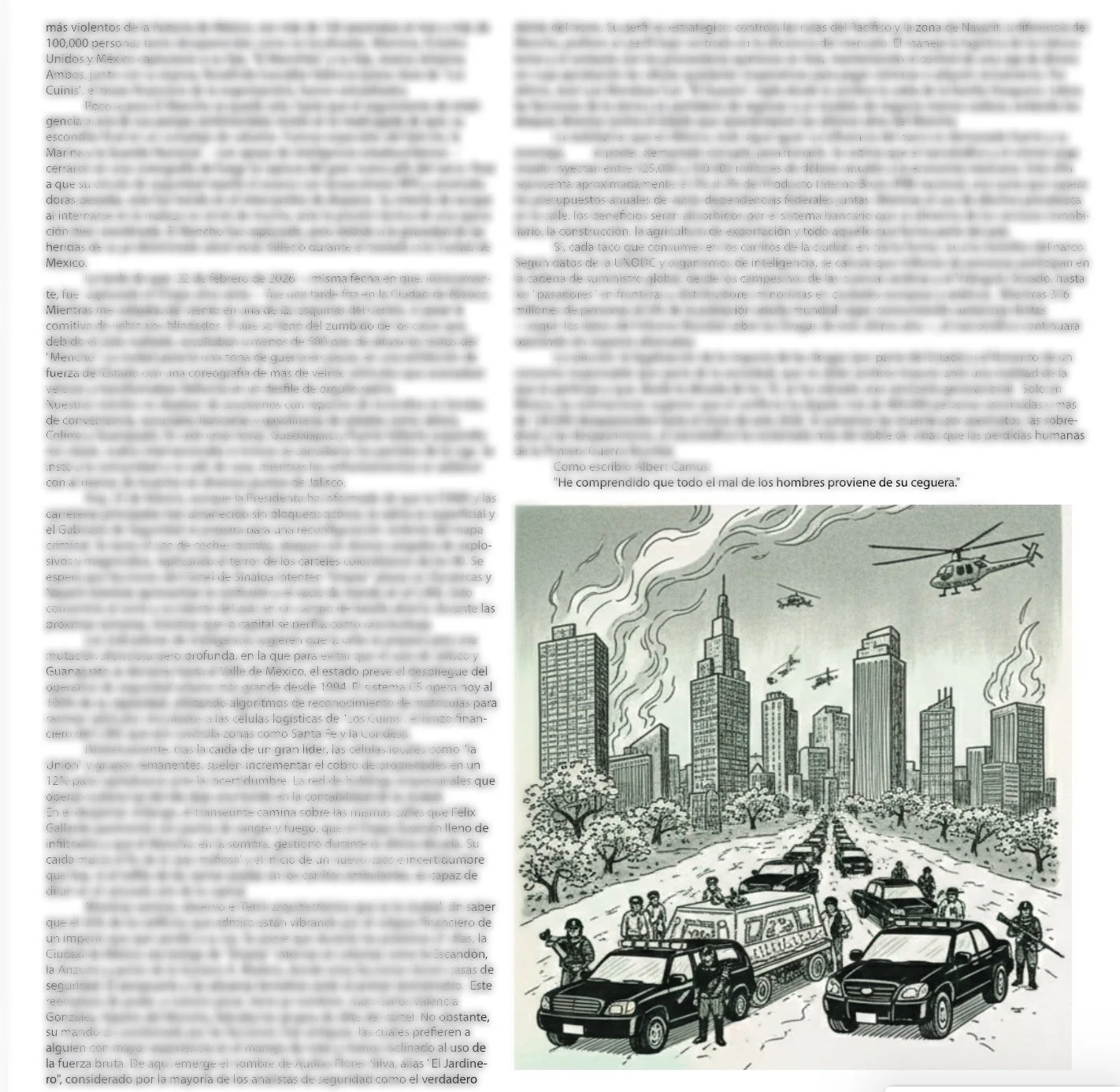
Just when I thought Mexico City couldn’t become any more Dantean, the mortal remains of “El Mencho” arrived yesterday, quite literally, spitting fire. The streets and highways, soiled by the daily dirt and graced by the falling of bougainvillea and jacaranda, are bracing for an imminent landscape of shattered glass in pools of gasoline. News arrived from the north, in Jalisco, that the riots had begun.
And yet yesterday, the chilango hours faded into the evening without genuine astonishment. Although school classes for this morning have been suspended. For the rest, pedestrians on buses and metro seemed to immolate themselves for the abstract cause of lifting the country, as if nothing happened.
Resignation is the very thread that weaves the national huipil of what it means to survive in Mexico. This quiet “ni modo”( oh well) is not apathy; it is a learned mechanism of endurance. It does not shatter even with the fall of another face carved into the Mount Rushmore of the world’s criminals, hopefully settling his accounts at the City of Dis. The latest Archon of the Mexican Inferno continues a bitter tradition of corrupting institutions, one that undeniably shaped both culture and reality of the Mexican people.
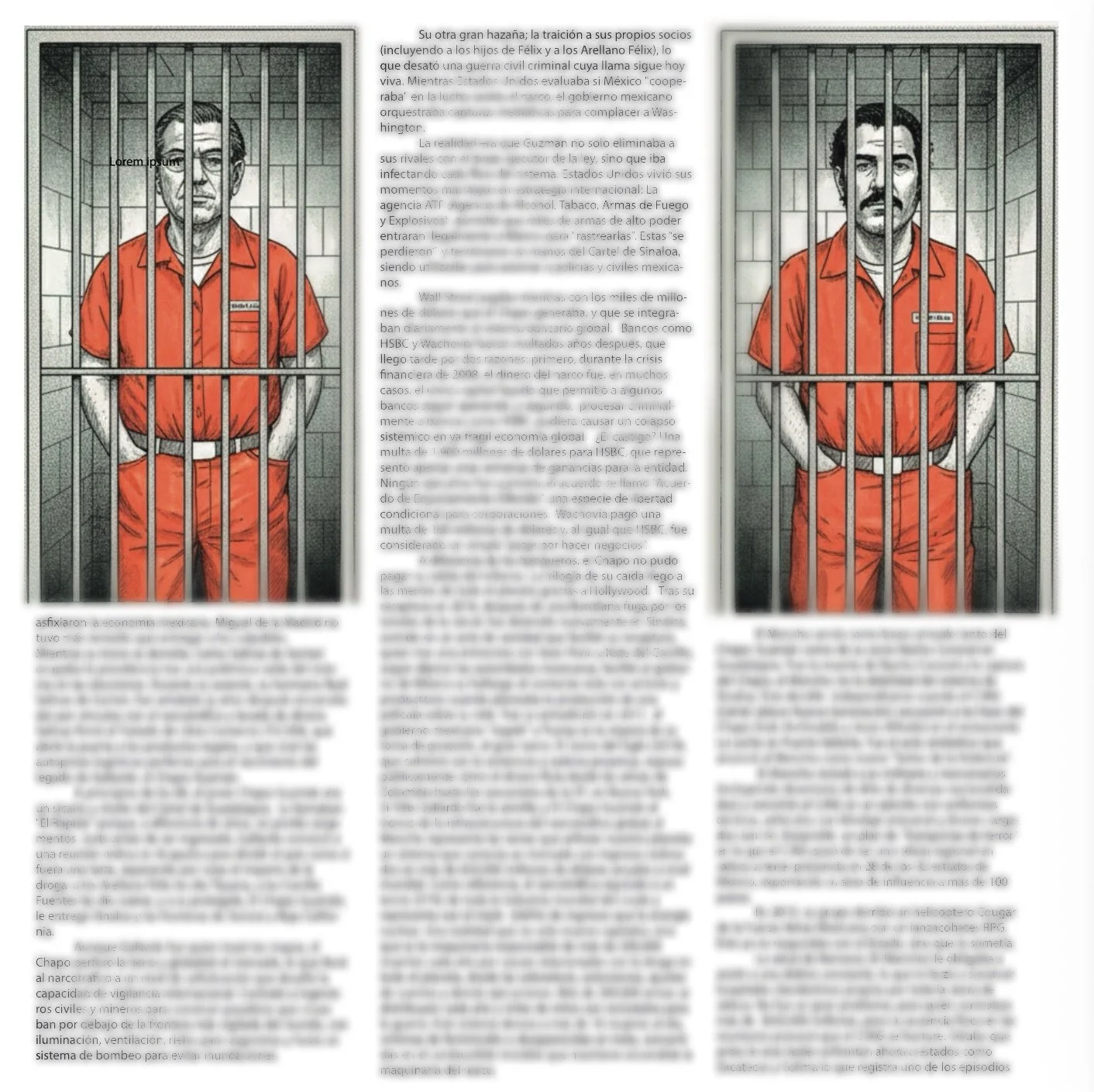
It all began with Miguel Ángel Félix Gallardo, the “Jefe de Jefes“ (Boss of Bosses). Before him, the gomeros (the men whose hands worked the earth to harvest opium) were scattered across various plazas, disorganized and fragmented. In the 1980s, Gallardo gathered these desperate families into a single, terrifying totality: the Guadalajara Cartel. With them, the first truly criminal corporation, one intricately bound to the highest echelons of political authority. Unlike the average narco (criminals hiding out in the mountains), Gallardo was a public figure in the Mexican lobby of the 70s and 80s. The State did not hunt him; the State facilitated him. The agents of the DFS (the president’s own political police, the apex of Mexican intelligence) served as his personal bodyguards. They handed him official credentials so he might traverse the country entirely without friction.
Miguel de la Madrid (president of the country from 1982 to 1988) uncovered his entanglement after the murder of Kiki Camarena, a Mexican-American DEA agent who had dared to penetrate the cartel’s operations. The catalyst for this violence was the discovery of Rancho Búfalo ( a staggering, 1,000-hectare marijuana plantation carved into the soil of Chihuahua). When the army finally destroyed that harvest, which was valued at eight billion dollars, the cartel retaliated. That morning, a new word was born: “levantón” (abduction). Camarena was “lifted” from the street in broad daylight, directly in front of the US consulate in Guadalajara. The violence was no longer a secret kept in the dark; it had become a public demonstration, a way of showing everyone who truly owned the streets.
THIS IS A SAMPLE FROM THE ARTICLE THE FALL OF EL MENCHO
KEEP READING @SUBSTACK
OR SUSCRIBE TO THE CHANEL HERE: https://carusowrites.substack.com
FORM EVERY DONATION YOU WILL RECEIVE THE PDF VERSION